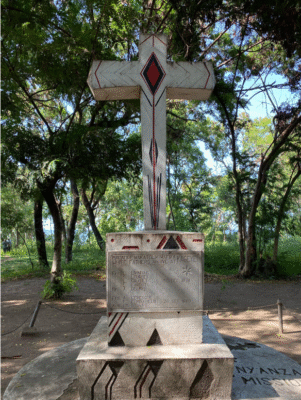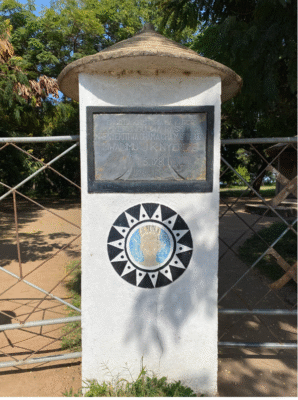
As a collaborator with Bujora Cultural centre (Sukuma Museum), we deeply value the site’s rich history—rooted in Sukuma chiefdoms, the missionaries’ route, Kageye Historical site has been underdeveloped for a long time especially after the death of Fr. David Clement who started Bujora Museum.
In the year 1875, explorer Henry Morton Stanley surveyed the geographical area of the village of Kageye and wrote that this village is located 25 miles (39 kilometers) from the shores of Nyanza or Lake Victoria, east of the city of Mwanza, near the small town of Kayenze, 16 miles (24 kilometers) from the Sukuma museum in Bujora. Kageye is a village under the Sukuma Kingdom. This area have been established about 400 years ago by a notable person named Nkanda, who was known for appointing his nephews, the Babinza, as chiefs. When Kageye began to be known and famous, the Sukuma Kingdom was under Chief Nkingwa Machimu, who lived in the village of Ng’wakipili, now called Kibambi, near Nyanguge. The chief’s assistant in the Kageye area at that time was called Kaduma Nguku.
In East Africa, the slave trade was carried out by Arabs. This trade continued worldwide despite the outcry from figures like Dr. Livingstone. By 1830, the slave trade had been abolished in the British Empire In 1845, the Sultan of Zanzibar also announced a ban on the transportation of slaves, although slavery remained legal within his rule. Kageye was very famous for the slave trade involving slaves from Buganda and Ukerewe.
In 1890, a German named Stuhlmann banned the slave trade at the Arab stations of Masanza, Magu, and Kayenze by directly prohibiting human trafficking. Following this action, Stuhlmann found hundreds of freed slaves, many of whom were not Sukuma. There were also those from Kilwa, as well as Wabemba and Wagogo.
The brutal legacy of the Arab slave trade (where captives from Uganda and northwest Tanzania were held before their journey to Bagamoyo and Zanzibar), and the graves of early explorers and missionaries.
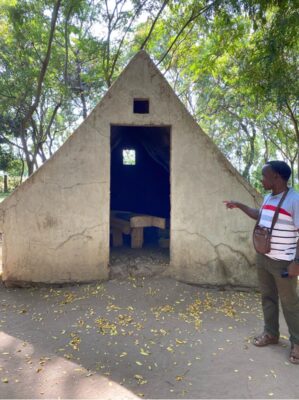
Explorers
The first geographer to enter the African continent and provide some limited and insufficient information about the journey of a Greek named Diogenes was Marinus of Tyre from Syria. This Greek traveled within Africa for 25 days and saw the great lakes. It is said that at that time there were no Sukuma living in these areas. Africa was a continent unknown to Europe, and what intrigued many was the desire to discover the source of the Nile River. Many prominent scholars, including Dr. Livingstone, died without providing any information about the source of the Nile. The first to glimpse Lake Victoria was Speke, who was informed by an Arab that there was a very large lake north of Tabora called Kazeh at that time. After receiving information about this large lake, Speke traveled north and succeeded in seeing Lake Victoria on August 3, 1858, while standing on the hill of Isamilo in Mwanza. After spending a few days with an Arab named Mansur of Ngombe, he then visited King Kingo of Ng’wanza, and upon returning to Tabora to meet his friend Burton, he exclaimed “Eureka!” meaning “I have discovered; I have found the source of the Nile!” Burton dismissed him because he had not seen the Nile River itself.
When they returned to England, the geographical society sent Speke and Grant again to trace the actual source of the Nile. They left England in November 1860, passed west of Lake Victoria, crossed the Kagera River in Karagwe, and on July 28, 1862, they reached the Ripon Falls where the Nile River begins. There, they agreed that Speke was correct that the source of the Nile is Lake Victoria.
However, another question arose: was the lake they saw at the Nile Falls the same one that Speke had seen at Isamilo in Mwanza? At that time, there was no one to confirm this. After Stanley returned from rescuing Dr. Livingstone, he arrived in England and was sent back to Africa to circumnavigate the lake to verify if it was indeed Lake Victoria.
Christian Missionaries and Research Expeditions
Dr. Livingstone’s journey and the report he gave upon returning to England in 1856 led to the arrival of various missionaries in East Africa. Dr. Livingstone’s report was followed by Stanley’s emphasis on the urgent need to spread Christianity in the land of Buganda. The Church Mission Society (C.M.S.) was sent based on the views of the English to establish a true religion, reform existing customs, abolish the slave trade, and promote legitimate trade. Initially, 8 men were sent led by Lt. Shergold Smith. Others included Thomas ‘O’ Neili, Mr. James Robertson, Pastor Wilson, Alex Mackay, Dr. John Smith, and two artists. These individuals left Zanzibar on July 1, 1876, with supplies to build a boat to take them to Buganda.
On their journey, they faced many challenges and delays, including delays from porters, fevers, bribes, or taxes paid to chiefs every time they arrived in a certain Kingdom, and eventually reached Kageye at the home of Ng’wanangwa Kaduma on January 29, 1877. On May 11, 1877, Dr. John Smith died of fever and was buried near Barker’s grave in Kageye